MARTECH 2026 - Conference Paper
| A conference paper is published under the TwinShip Consortium Horizon Europe Project with the title of 'Large Language Model-Assisted Weather Routing for Energy-Efficient Voyage Optimization in Shipping' by the authors of Mahmood (Afshin) Taghavi, Katharina Demmich, Martin Pontius, Patraucean Alexandru, Lucian Cucos, Lokukaluge Prasad Perera. The paper was presented by Mahmood (Afshin) Taghavi Taghavi at the 8th International Conference on Maritime Technology and Engineering (MARTECH 2026), held in Lisbon at CENTEC Técnico, Portugal. | 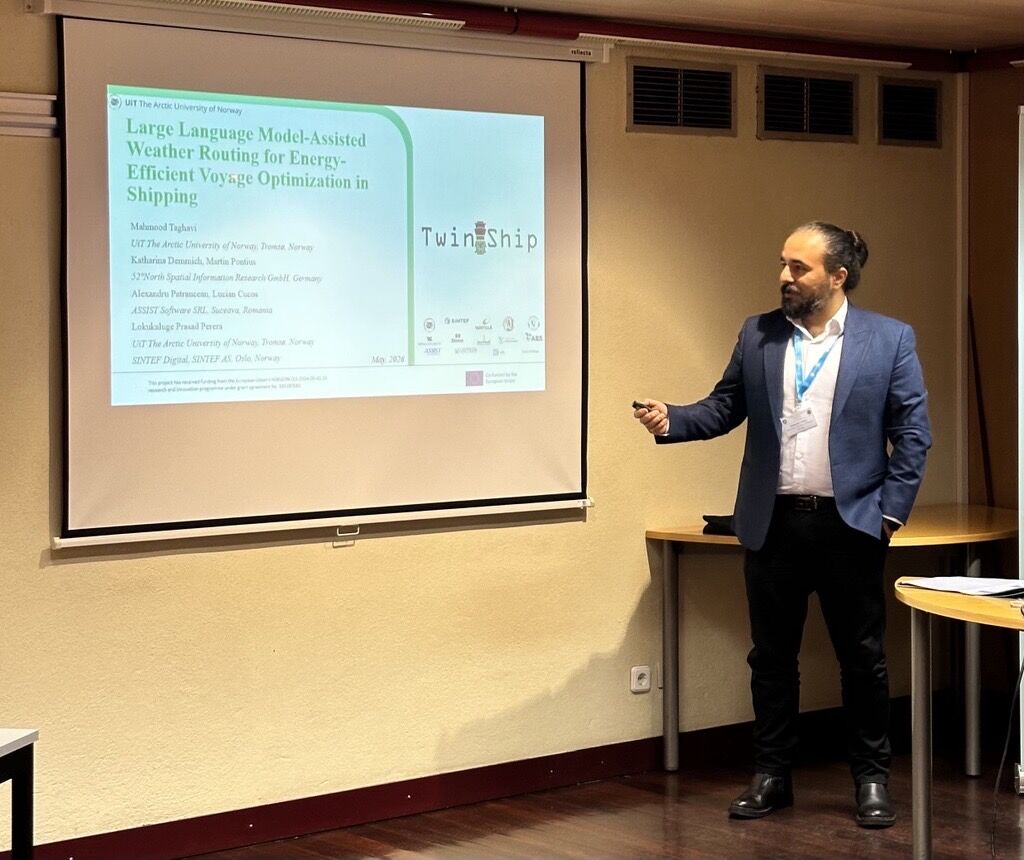 |
MARTECH 2026 - Conference Paper
| A conference paper is published under the TwinShip Consortium Horizon Europe Project with the title of 'Data-Driven Life Cycle Cost Analysis and Environmental Impact Assessment in Shipping' by the authors Muhammad Omer Farooq Zahid, and Lokukaluge Prasad Perera. The paper was presented by Muhammad Omer Farooq Zahid at the 8th International Conference on Maritime Technology and Engineering (MARTECH 2026), held in Lisbon at CENTEC Técnico, Portugal | 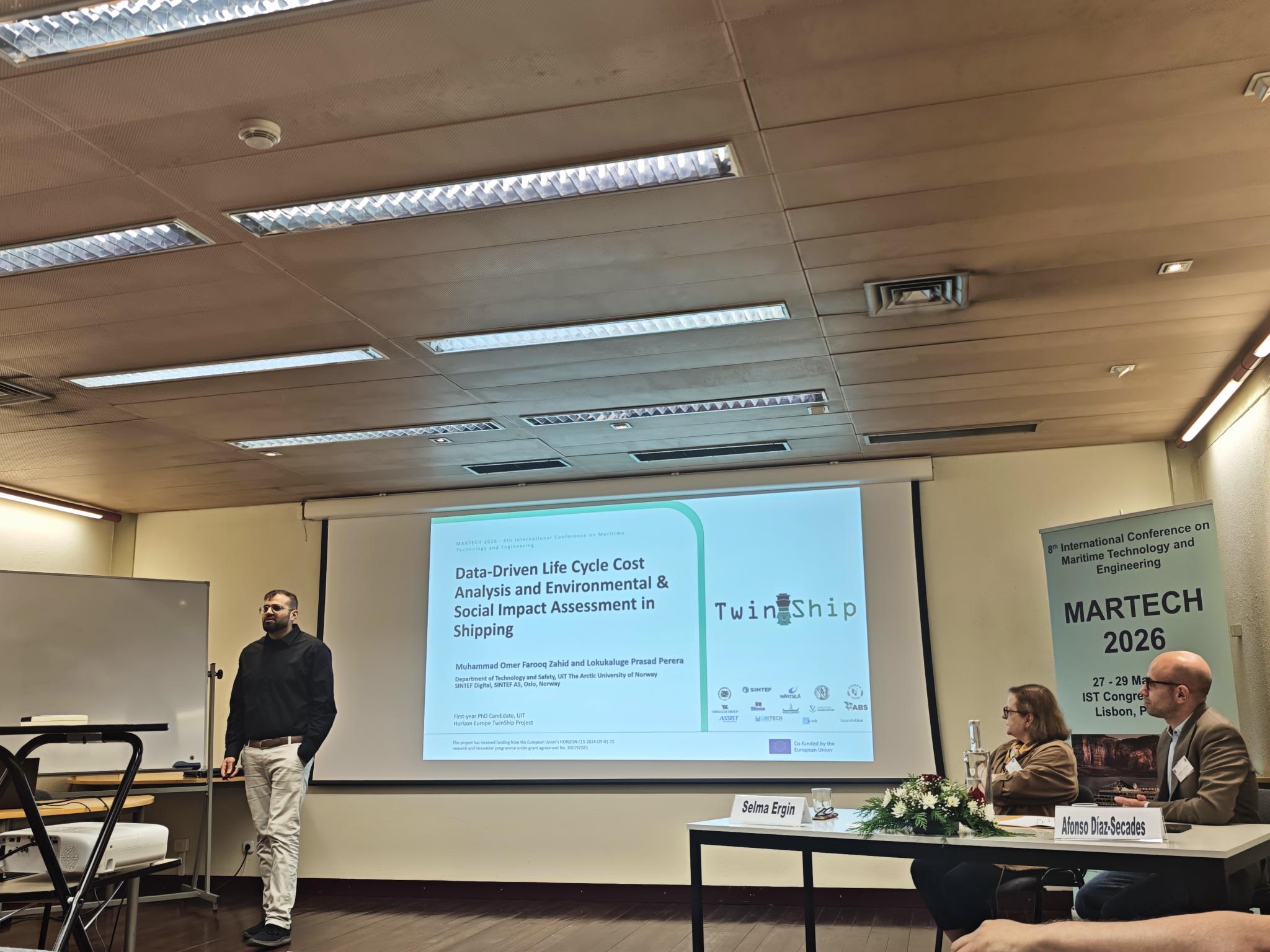 |
MARTECH 2026 - Conference Paper
| A conference paper is published under the TwinShip Consortium Horizon Europe Project with the title of 'Deep Learning towards Marine Engine Fuel Consumption Prediction in Ship Operational Conditions' by the authors of Muhammad Adnan, Lokukaluge Prasad Perera, and Dumitru Roman. The paper was presented by Muhammad Adnan at the 8th International Conference on Maritime Technology and Engineering (MARTECH 2026), held in Lisbon at CENTEC Técnico, Portugal. | 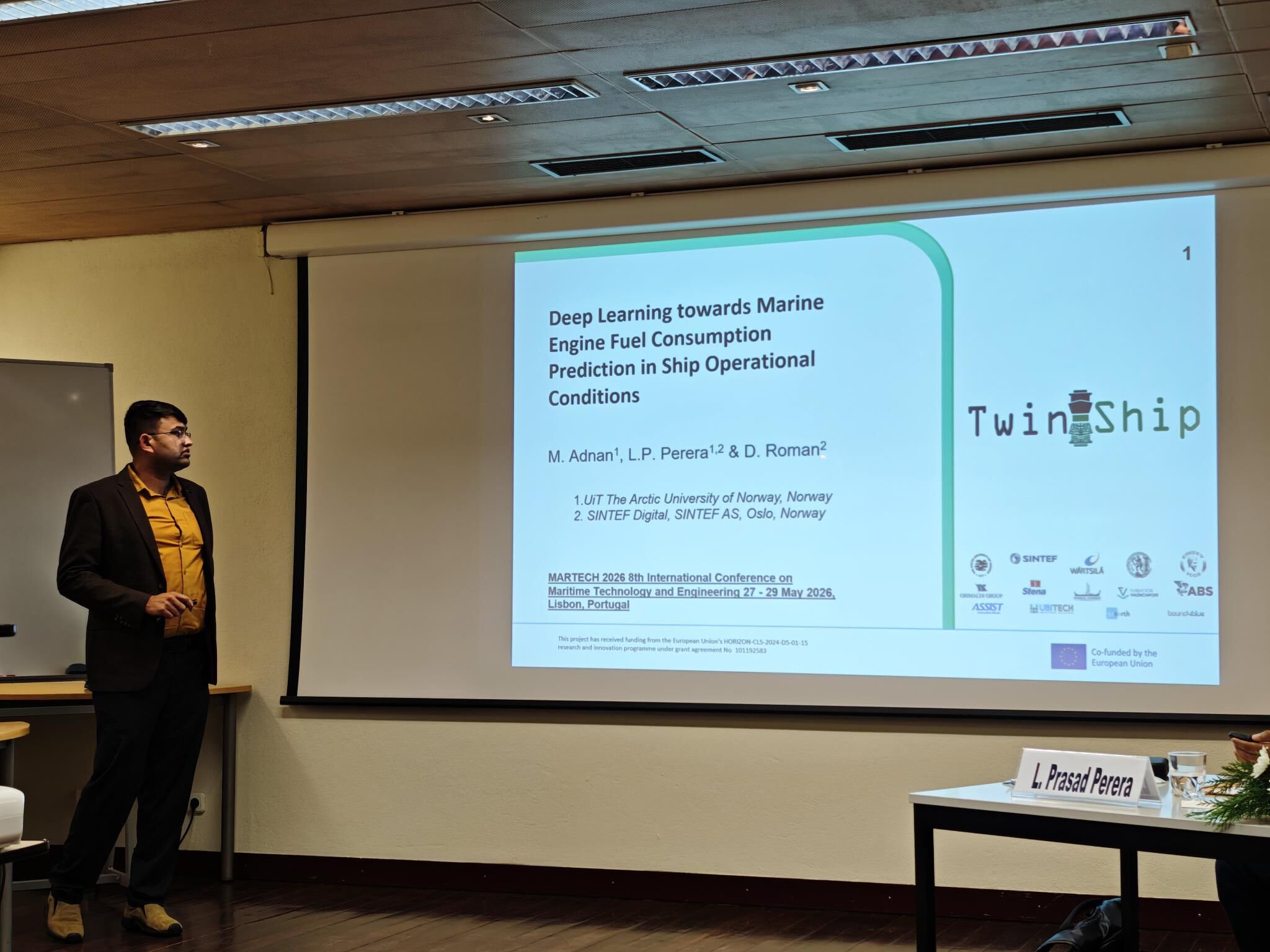 |
TwinShip in European Autonomous Shipping Research Forum
| The TwinShip Consortium Horizon Europe project was presented at the European Autonomous Shipping Research Forum, Oslo, Norway, in May 2026 by Dumitru Roman. The event was organized by UiT- The Arctic University of Norway and American Bureau of Shipping (ABS). | 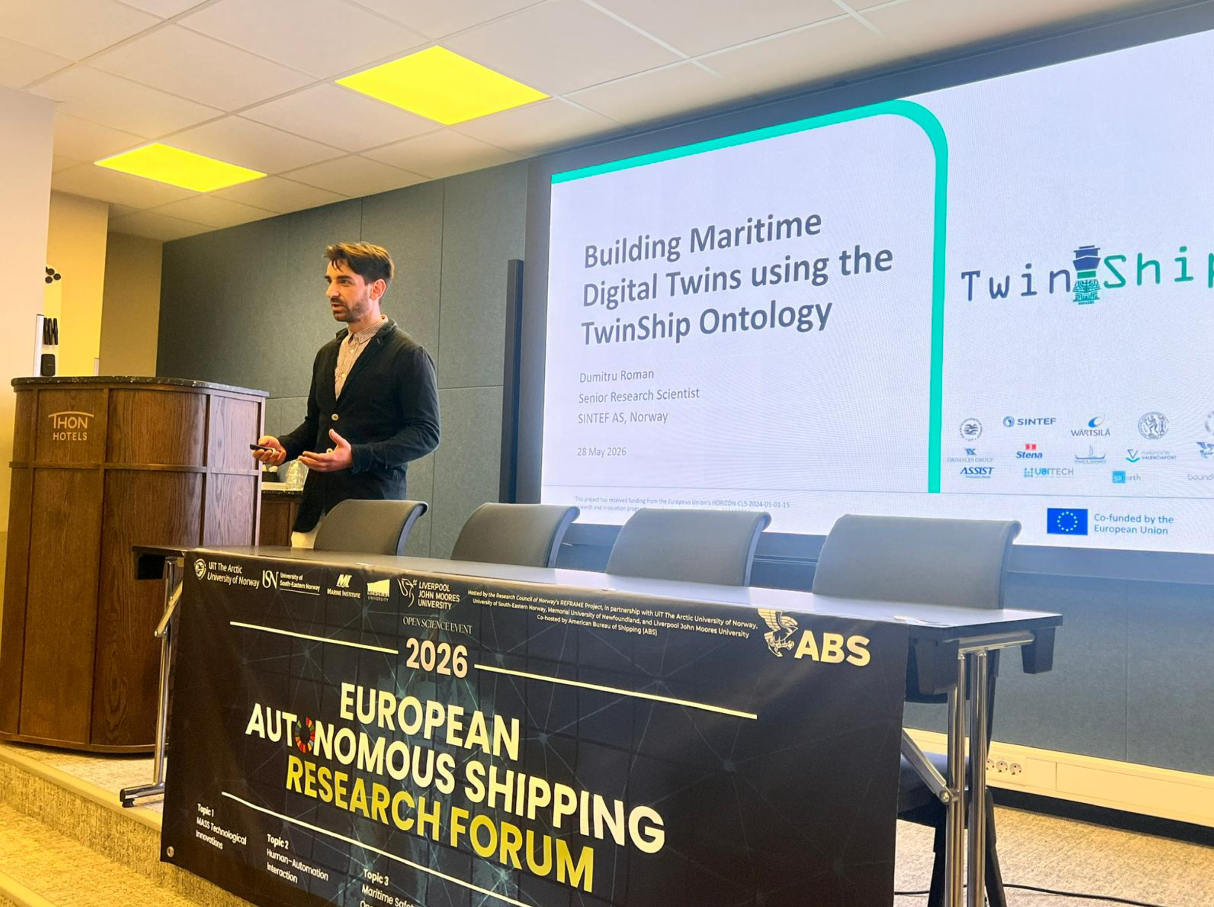 |
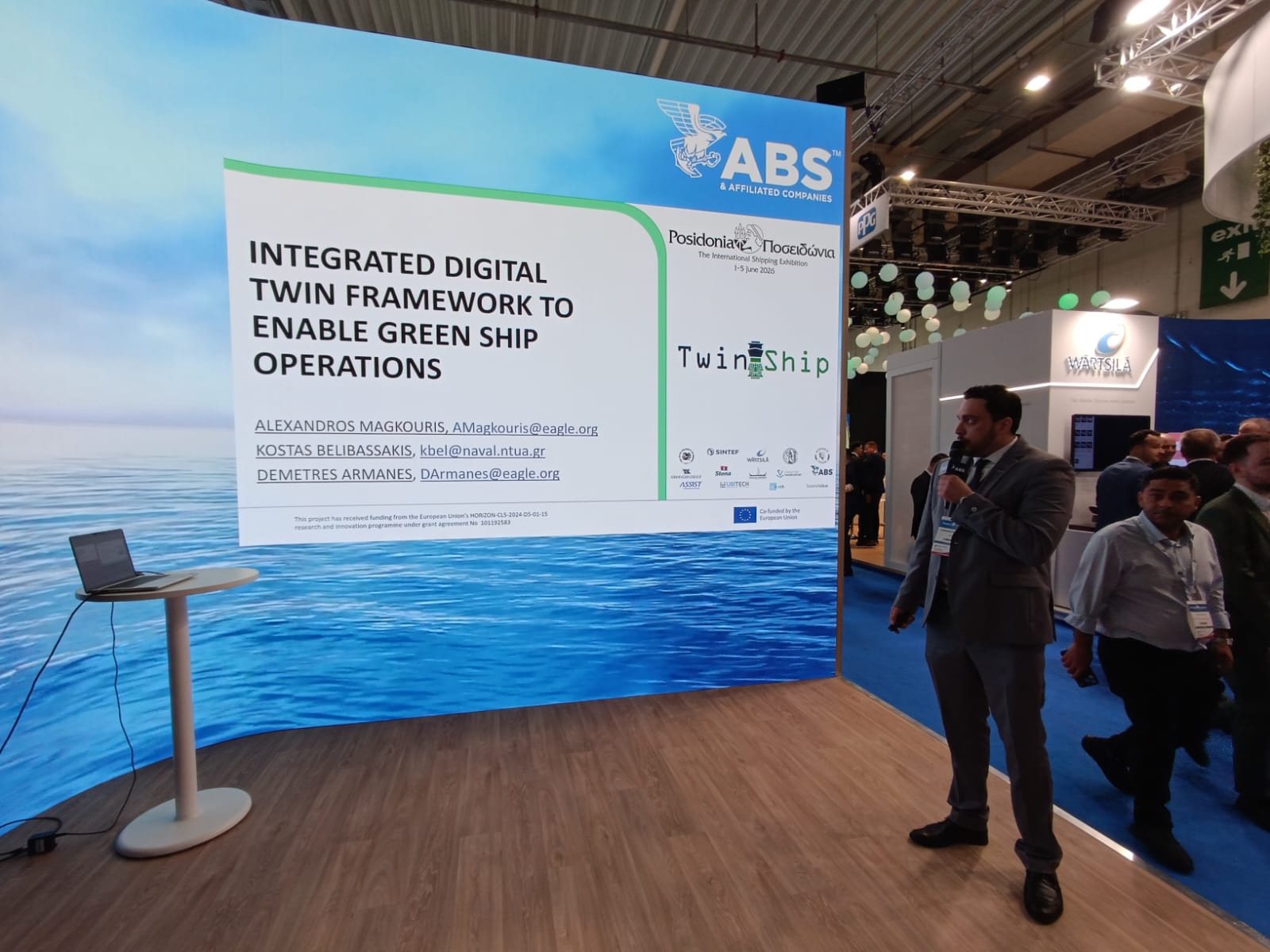
TwinShip in Posidonia 2026
| TwinShip Consortium Horizon Europe project was presented at the Posidonia Events 2026 by American Bureau of Shipping (ABS), presented by Alexandros Magkouris, Kostas Belibassakis (National Technical University of Athens) and Demetres Armanes, Ph.D. |
 |
More Articles …
Page 4 of 12